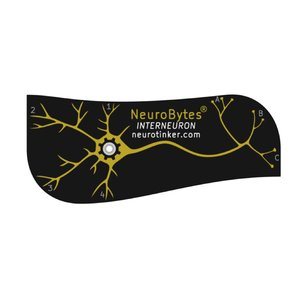
Interneuron
The Interneuron is the main processing element in a NeuroBytes network. Interneurons receive inputs via dendrites, display status using an LED, and send outputs to downstream NeuroBytes through the axon terminal.

The experiment library
Start with a single module, add a sensor, and watch a behavior emerge. The NeuroBytes ecosystem is built to be rewired, rebuilt, and understood by hand.
Sense, integrate, act
In the NeuroBytes ecosystem, there are modules that sense the environment, integrate that sensation and make memories, and turn that integration into motion.
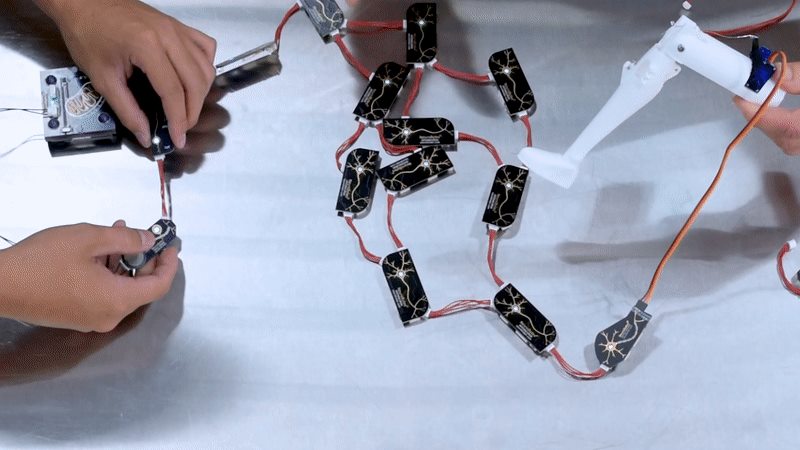
The Interneuron is the main processing element in a NeuroBytes network. Interneurons receive inputs via dendrites, display status using an LED, and send outputs to downstream NeuroBytes through the axon terminal.
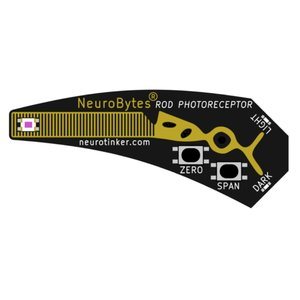
The Rod Photoreceptor detects changes in ambient light using a photocell. This board can be calibrated using the on board Zero and Span buttons to reflect ambient conditions, and sends information to downstream NeuroBytes via two output connectors.
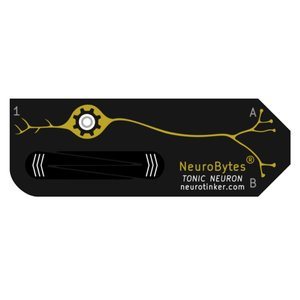
The Tonic Neuron acts as a pacemaker, providing an adjustable regular sequence of action potentials that can be used to excite or inhibit downstream NeuroBytes. The Tonic Neuron also receives bias signals on its single dendrite input.
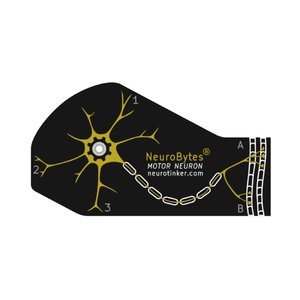
The Motor Neuron connects NeuroBytes networks to servo motors, allowing the network to produce motion. Motor Neurons receive inputs via three equally weighted dendrites and display status using an LED.
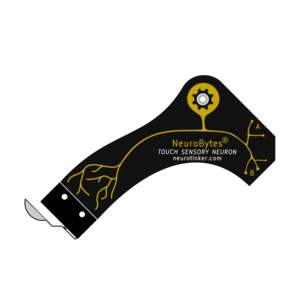
The Touch Sensory Neuron detects inputs using the attached switch. Touching the switch causes Touch Sensory Neurons to fire, sending information to downstream NeuroBytes via the two axon terminal connectors.
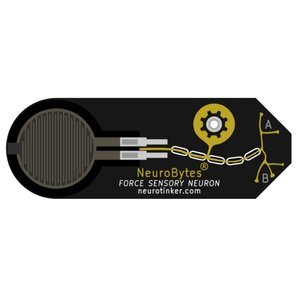
The Force Sensory Neuron detects inputs using an onboard force sensitive resistor. The Force Sensory Neuron varies its firing rate based on the pressure applied to the resistor, flashing its LED to indicate activity and sending action potentials to downstream NeuroBytes through the two axon terminal connections.
Kits
NeuroBytes are sold in physiology and engineering focused kits, which allow you to experiment with the circuits above and so much more.
| Kit | Focus | Price |
|---|---|---|
| NID Kit (Network Interface Device) | Interface | $59.00 |
| Skin Kit | Physiology | $99.00 |
| Knee Jerk Reflex Kit | Physiology | $119.00 |
| Eye Kit | Physiology | $139.00 |
| NeuroBuggy Kit | Engineering | $199.00 |
| Advanced NID Kit | Classroom | $299.00 |
| NeuroBuggy Classroom Kit | Classroom | $1,899.00 |
| Anatomy & Physiology Classroom Kit | Classroom | $1,899.00 |
Watch the signal
View a series of short video based experiments to accompany the NeuroBytes electronic neuron simulators. Click a poster to play the video here, or open it on YouTube.
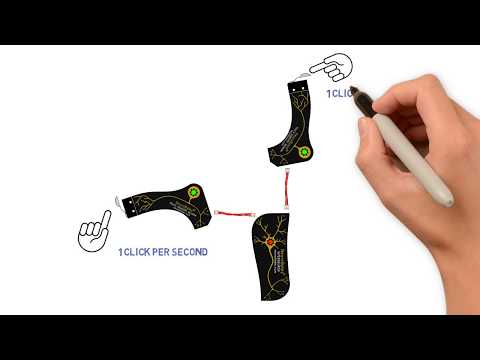
A short tour of the platform, the modules, and the cables that connect them.
Open on YouTube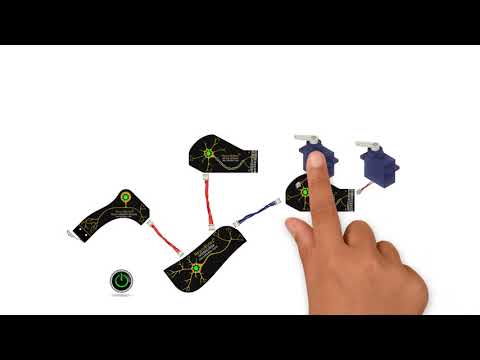
See how an interneuron responds to input and holds a simple memory.
Open on YouTube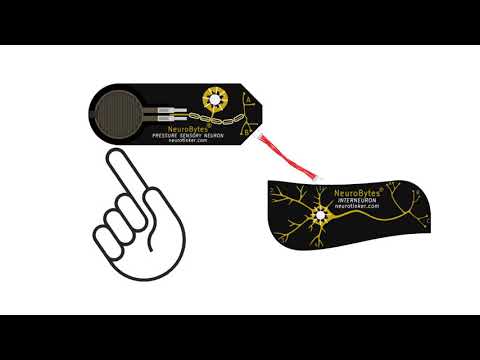
A motor neuron turns a signal into motion with a micro servo.
Open on YouTube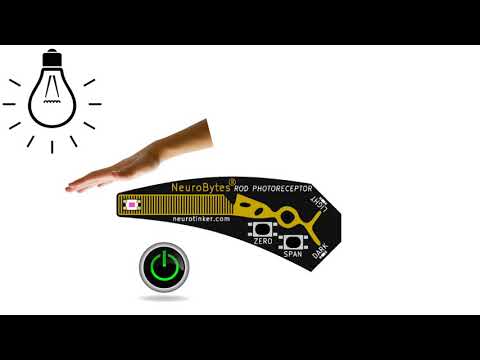
Pressure on the force sensitive resistor changes the firing rate of the neuron.
Open on YouTube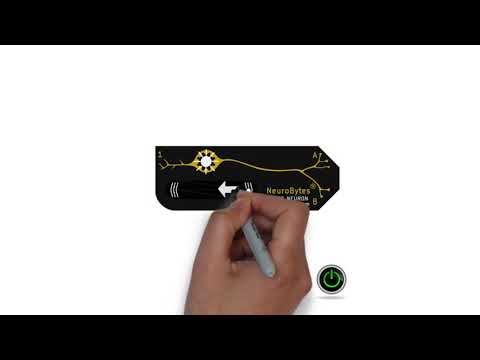
Watch a rod photoreceptor respond as light and shadow cross the sensor.
Open on YouTube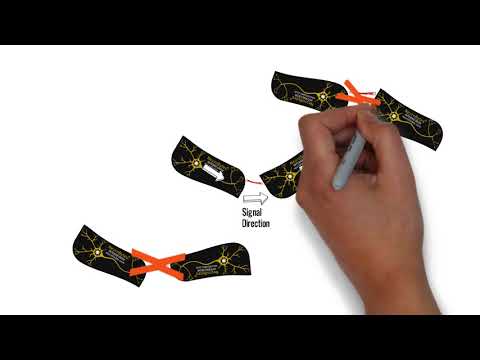
The tonic neuron sets a regular rhythm that other modules can follow.
Open on YouTube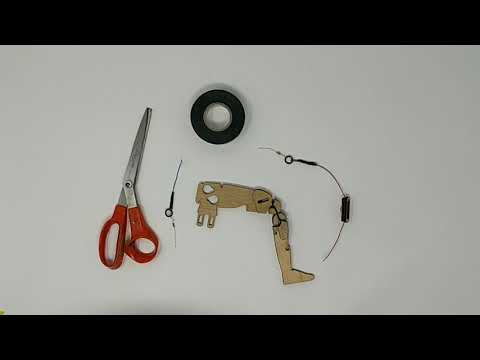
A step by step build of the laser cut leg model and its neuron circuit.
Open on YouTubeBuild notes
Each note describes one behavior, the modules involved, and how the wiring produces the result.
Memory, inhibition, and photoreception in single circuit builds.
Six behaviors built on the same wheeled chassis and neuron set.
For teachers
Classroom kits include a bound copy of the NeuroTinker curriculum. The PDF below covers the kit contents and the themes that connect the builds.