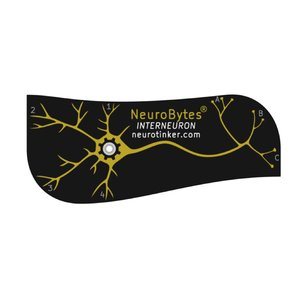
Interneuron
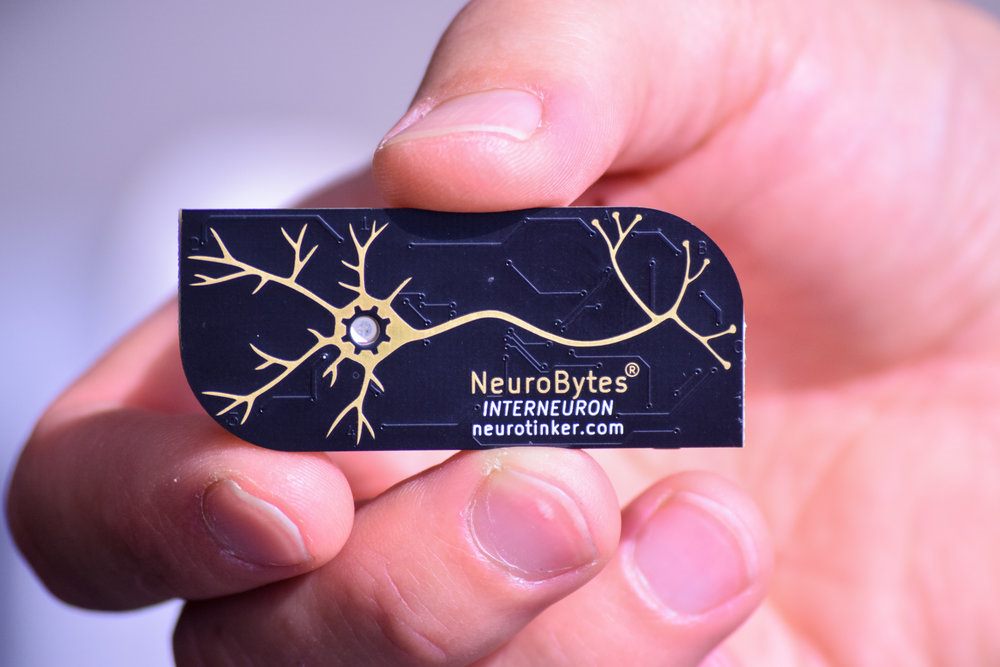
The main processing element in a NeuroBytes network. Interneurons receive inputs via dendrites, display status using an LED, and send outputs to downstream NeuroBytes through the axon terminal.

Neuroscience you can hold
NeuroBytes are hands on electronic neuron simulators that allow students, makers, and tinkerers to learn about the brain while physically building their own neural circuits, synapse by synapse.
 Neurons, synapses, and motion
The platform
NeuroBytes are hands on electronic neuron simulators that allow students, makers, and tinkerers to learn about the brain while physically building their own neural circuits, synapse by synapse.
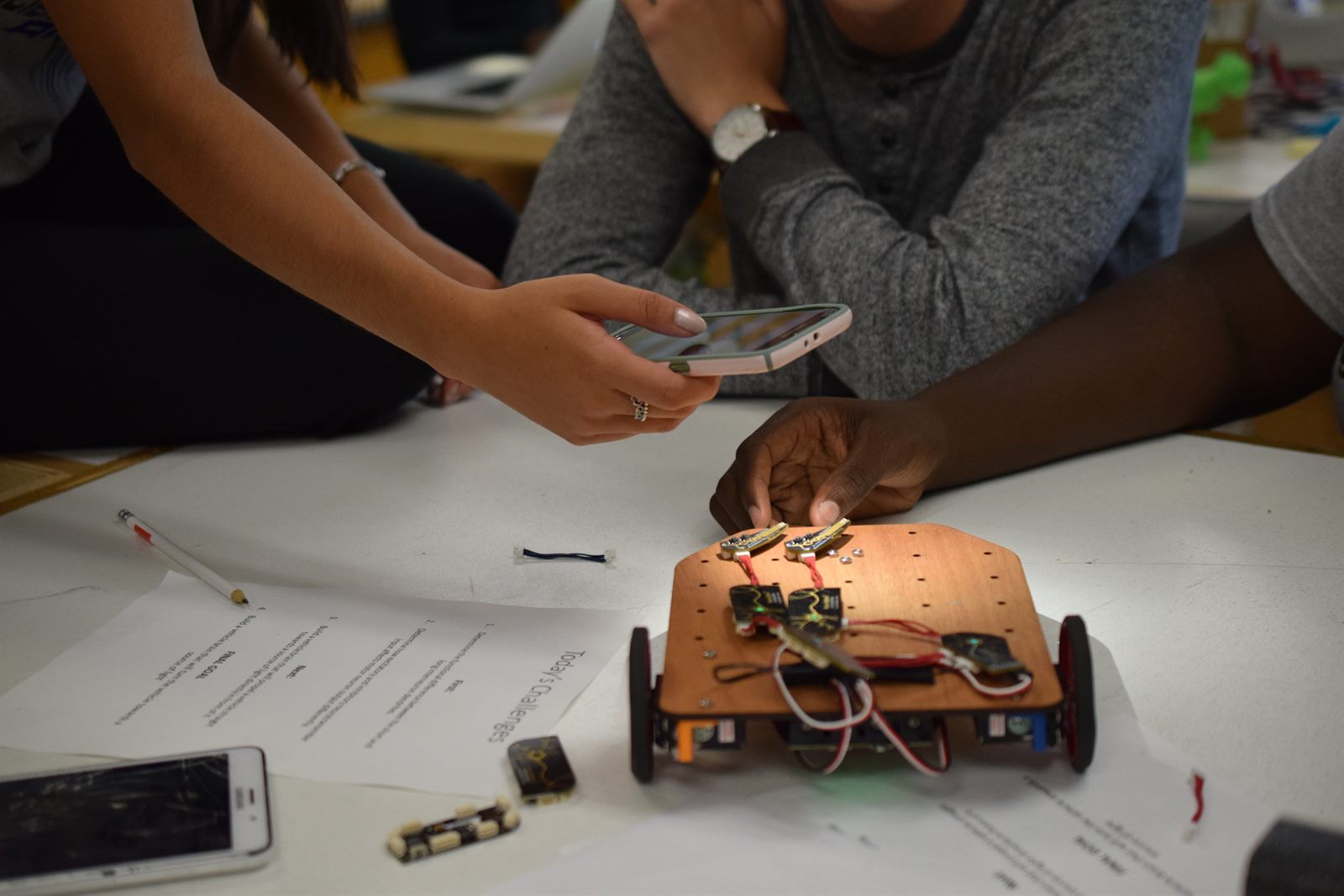
Each module represents a real cell type. Cables stand in for synapses. Build a light seeking buggy, a reflex arc, or a memory circuit, then change the wiring and watch the behavior change with it.

NeuroBytes began with a successful Kickstarter campaign.
Signal flow
In the NeuroBytes ecosystem, there are modules that sense the environment, integrate that sensation and make memories, and turn that integration into motion.

Rod photoreceptors, touch sensors, and force sensors turn light and contact into electrical signals.
Interneurons and tonic neurons process the signal, form simple memories, and set the timing of a circuit.
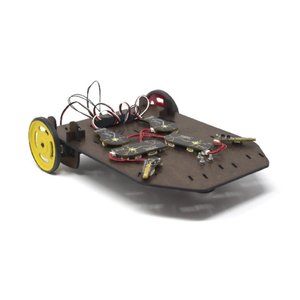
Motor neurons drive servos, so a circuit can move a NeuroBuggy, a model limb, or a classroom build.
The module set
Every module has a clear role, a visible LED, and connectors that make the wiring easy to change.
The main processing element in a NeuroBytes network. Interneurons receive inputs via dendrites, display status using an LED, and send outputs to downstream NeuroBytes through the axon terminal.
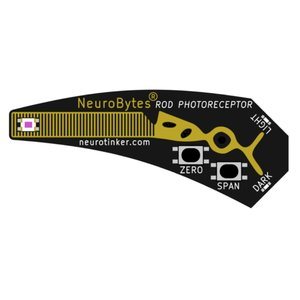
Detects changes in ambient light using a photocell. This board can be calibrated using the on board Zero and Span buttons to reflect ambient conditions, and sends information to downstream NeuroBytes via two output connectors.
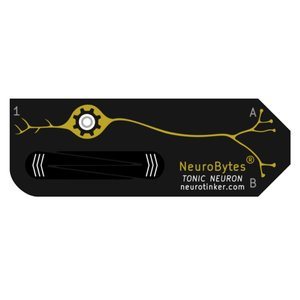
Acts as a pacemaker, providing an adjustable regular sequence of action potentials that can be used to excite or inhibit downstream NeuroBytes. The Tonic Neuron also receives bias signals on its single dendrite input.
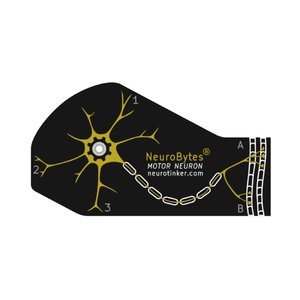
Connects NeuroBytes networks to servo motors, allowing the network to produce motion. Motor Neurons receive inputs via three equally weighted dendrites and display status using an LED.
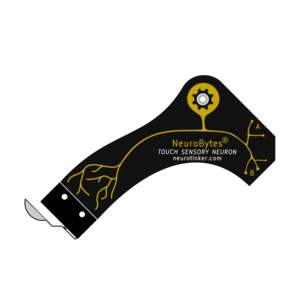
Detects inputs using the attached switch. Touching the switch causes Touch Sensory Neurons to fire, sending information to downstream NeuroBytes via the two axon terminal connectors.
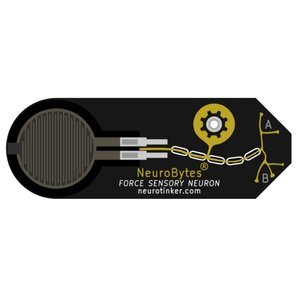
Detects inputs using an onboard force sensitive resistor. The Force Sensory Neuron varies its firing rate based on the pressure applied to the resistor, flashing its LED to indicate activity and sending action potentials to downstream NeuroBytes through the two axon terminal connections.
From the lab notebook
Short builds from the NeuroTinker team, each one focused on a single neural behavior.
A rod photoreceptor, an interneuron, and a flashlight show how dark output works.
Two tonic neurons and a sensory input produce an irregular firing pattern.
How changing synaptic strength lets a NeuroBytes interneuron hold a simple memory.
Kits
Kits include the modules, cables, storage, and printed experiment guide needed to start building.
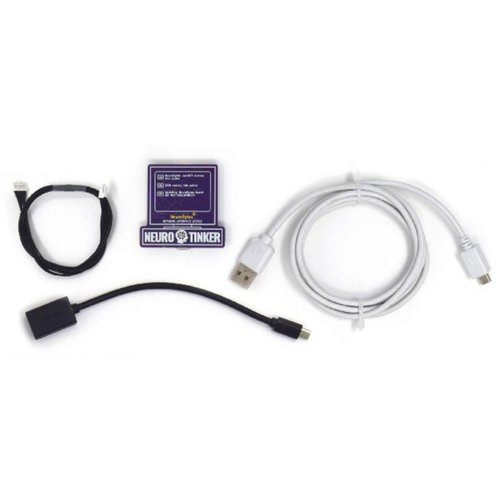
The NID Kit brings a NeuroBytes network to a computer with the Network Interface Device, USB cables, a power and comms cable, and a carrying case.
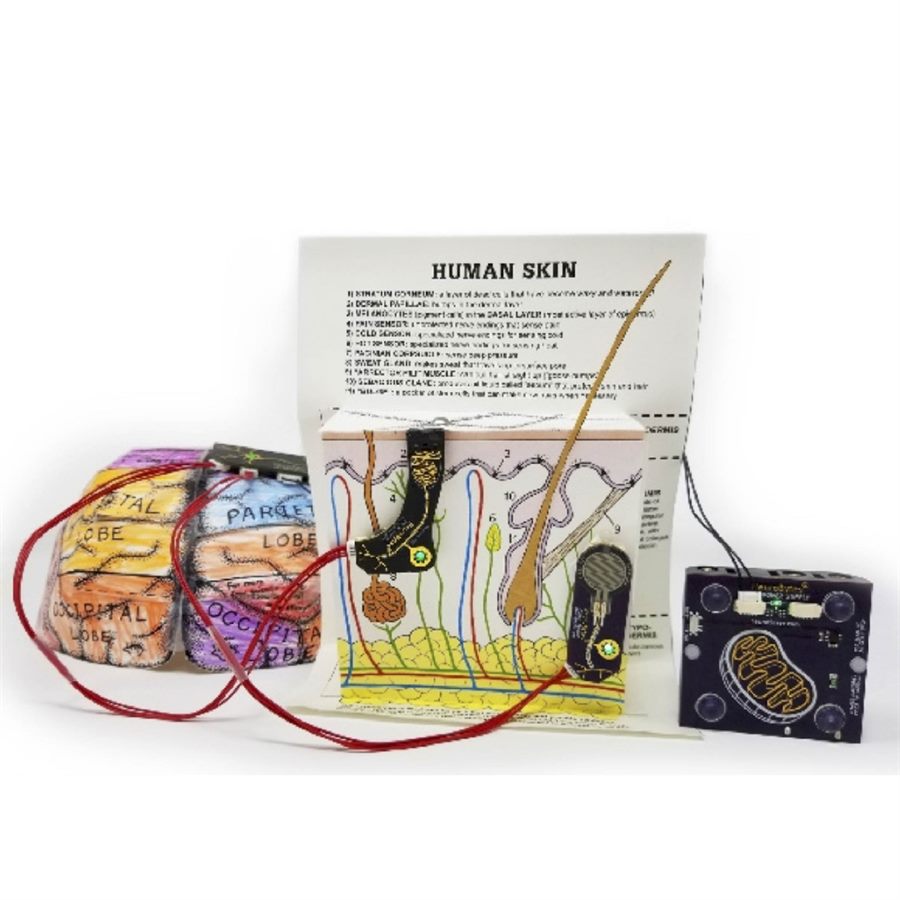
A physiology kit built around touch and pressure. Build a skin circuit, watch the signal travel, and see a servo respond.
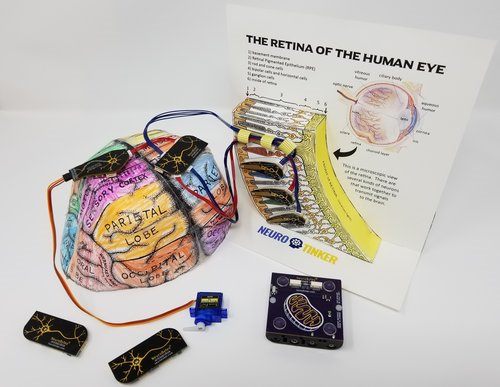
Explore the retina with photoreceptors, interneurons, and a motor output. The kit adds a cut and assemble eye cutaway and a brain cap.
A wheeled robot driven entirely by NeuroBytes. Build light seeking and touch avoiding behaviors with the modules in the kit.